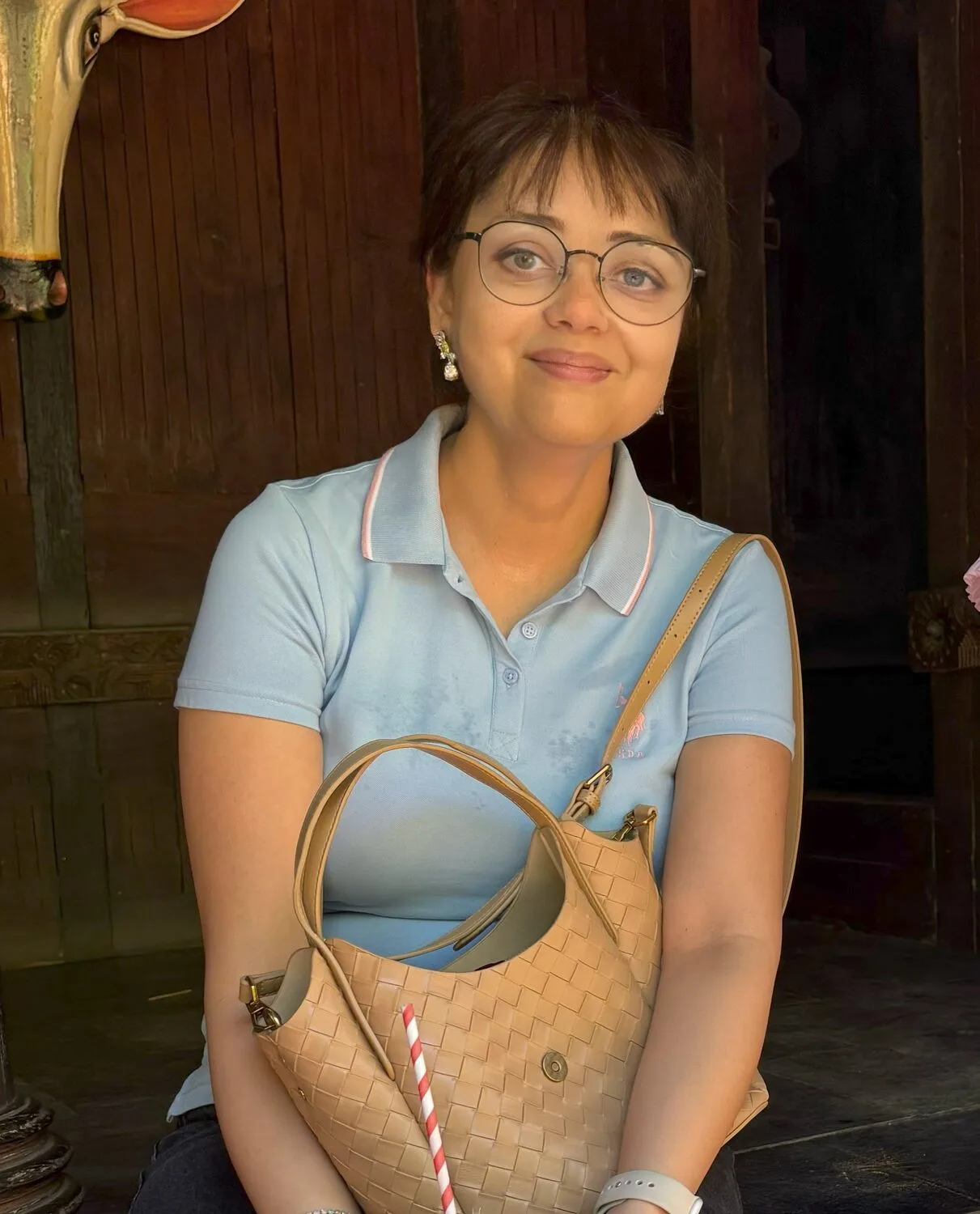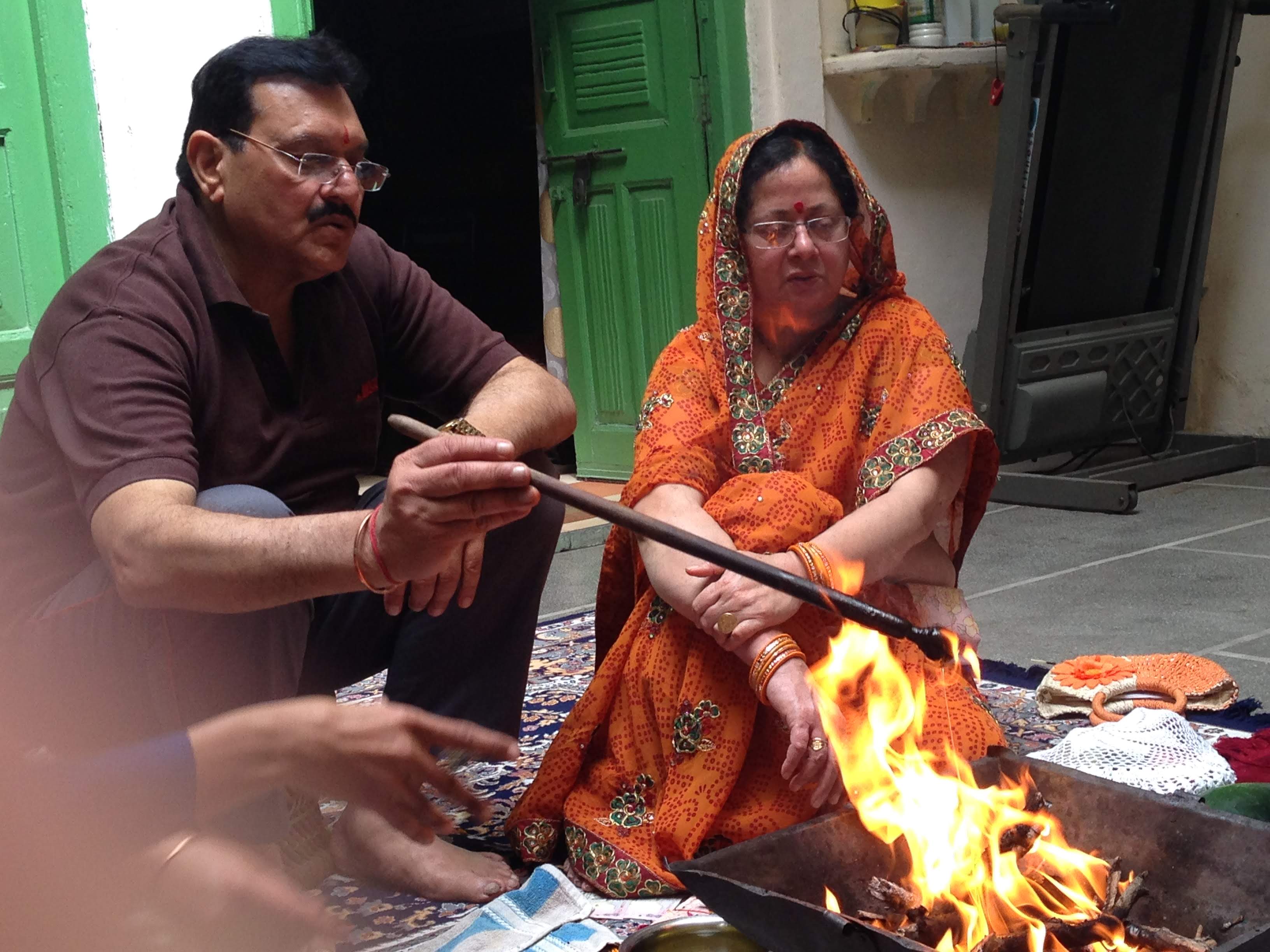
History remembers men. Not because men are more remarkable, but because the women beside them are too busy making that greatness possible to sit down and take notes. This piece is not a complaint about my father — the late Shri Mukesh Mehrotra saw my mother, respected her, and asked her opinion on almost everything of consequence. This piece is about the world outside our door, which never quite learned to see what he saw. And it is, above all, a thank you to that woman. Her name is Beena Mehrotra. She is my mother.
I want to write about her today with gratitude, not grievance. To name what she did — and what our society, then and now, still forgets to name. The women who hold the fort while the men build the empire. The women whose labour is so absorbed into the background of a household that no one, sometimes not even themselves, thinks to call it work.
My mother was not “just a housewife.” There is no just about it. She was, and is, an uncredited co-founder — uncredited by the town, by the newspapers, by the certificates on the wall, but never, I want to be clear, uncredited by my father.
The girl who worshipped her father
As a child, I looked up to my father the way small children look up to the sun. He was everywhere — on the stage, in the newspapers, at the doorway greeting one more person, at the Chairman’s table at the Kashipur Nagar Palika Parishad, on the podium at the flag-hoisting, quoted in Hindi dailies, felicitated at functions. Of course I admired him. Everyone did.
It took me many quiet years to notice something my child-mind could not compute. My father was able to be everywhere and everything because my mother was in exactly one place, doing exactly everything.
She was in our home. And in our home, she was doing the invisible work of ten people.
She did not inspire him — that was his own inspiration, his own drive to serve. She facilitated his inspiration. And there is a difference. To inspire is a beautiful, singular gift. To facilitate is a daily, unending act of engineering. Facilitation is what turns a man’s vision into a functioning schedule, a functioning family, a functioning home from which greatness can walk out the door each morning wearing a clean shirt.
What “just a housewife” actually means
Let me tell you what my mother did — and this is only the surface, because the deeper work is impossible to list.
Mummy’s job description — a partial list
Cook. Clean. Dust. Wash. Provide. Shop. School pick-ups. School drop-offs. Organise. Anticipate. Remember. Remember birthdays, anniversaries, medicines, exam dates, festival dates, election dates, guest arrivals, party workers’ meals, the tailor’s appointment, the plumber’s payment, the vegetable seller’s credit. Manage the family’s finances quietly. Manage the family’s dignity even more quietly. Care for my grandfather. Involve my Tai and Tau ji. Assign small duties to me and my brother so we would grow up knowing how to be useful. And still — still — be the first person my father looked at when he came home tired.
Not one person was dependent on her. An entire family was. And beyond the family — the entire network of people who circled our home. Friends, relatives, party workers, constituents, unannounced guests. Anyone who walked through our door found tea in their hand within minutes. Nobody who visited Papa ever had reason to say, we came, but they made us wait. They did not make anyone wait. Because she did not let anyone wait.
My father would call from the market at noon and say, “Beena, I’m bringing four people home for lunch.” By the time they arrived, four thalis were laid, four glasses of water were poured, hot rotis were on the table, and my mother was smiling as if she had been expecting them since morning. That was not luck. That was a system so well-run it looked like magic. Only the people who live inside a magic trick know how much rehearsal it takes.
The 26th of January, and the chai for a hundred people
For decades — literally decades — my father organised the Republic Day flag-hoisting in Kashipur. It was one of his great civic loves. He would rise before the sun, put on his cap, and go stand where the tricolour would be raised.
What no one who attended those ceremonies ever saw was what happened in our kitchen the night before, and in the pre-dawn dark of the 26th itself. My mother would be up preparing chai and snacks for the hundred people who would drift in and out of our home that morning — local leaders, party workers, well-wishers, the man who came to help set up the mikes, the boys who had marched in the parade, the neighbour who wanted to shake my father’s hand. Endless cups. Endless plates. Endless dishwashing after.
Papa hoisted the flag. The photographs were taken of him. His name was in the paper the next day. Papa never sat down and said “thank you” out loud — that was not the language of his generation, and I am not going to pretend it was. But when he came home that evening, exhausted, he did what he always did with Mummy: he asked her what had gone well, what had not, and what should be done differently next year. The question was his thanks. The fact that her answer was the one he wrote down — that was his respect.
Mohan’s cornflakes, and the lessons that stayed
My mother was not only doing the physical work. She was, in every small transaction of our childhood, teaching my brother Arpit and me the values that would run our whole lives.
I remember, before returning to boarding school each term, we would prepare a shopping list. Kellogg’s Cornflakes was on that list, in careful handwriting, because that was what everyone else at school had. On the day of the shopping, my mother would gently place a packet of Mohan’s cornflakes in the basket instead, and, without any lecture, without any shaming, she would explain: “Both are the same, beta. This one is made here. This one is what we can afford this month with dignity. The other one is a name. Learn to know the difference.”
Two things happened in that small aisle. She taught me the value of money. And she taught me to hold my ground and not be swayed by what everyone else had. She did not turn the moment into a speech. She turned it into a habit. To this day I check the shelf behind the branded packet.
She did that hundreds of times, in hundreds of small acts, and none of them were on any resume.
The election canvassing she was never thanked for
Election seasons in Kashipur were their own weather. Our house filled up with party workers, women supporters, friends who had come to campaign. My mother would feed all of them — and I mean actually feed, cooked-food-on-plates feed — and only then, after everyone else had eaten, would she change her sari and step out of the house herself.
She would walk for hours in the neighbourhoods with the other women, canvassing door to door in the heat. She would knock on doors, ask after grandmothers, remember children’s names, hold hands, listen to complaints, promise nothing she could not keep, and quietly build the trust that eventually put my father on his stage.
And then she would walk back home, and the second shift would begin. Dinner. The dishes. Tomorrow’s planning. My father would come home tired — deservedly, honourably tired — and collapse. My mother had no such option. When Papa was tired, Mummy had little respite. When Papa slept, Mummy was still awake, thinking about tomorrow’s crowd.
Nobody made a speech about it. Nobody thanked her by name. She would have been embarrassed if they had.
The one whose opinion he asked
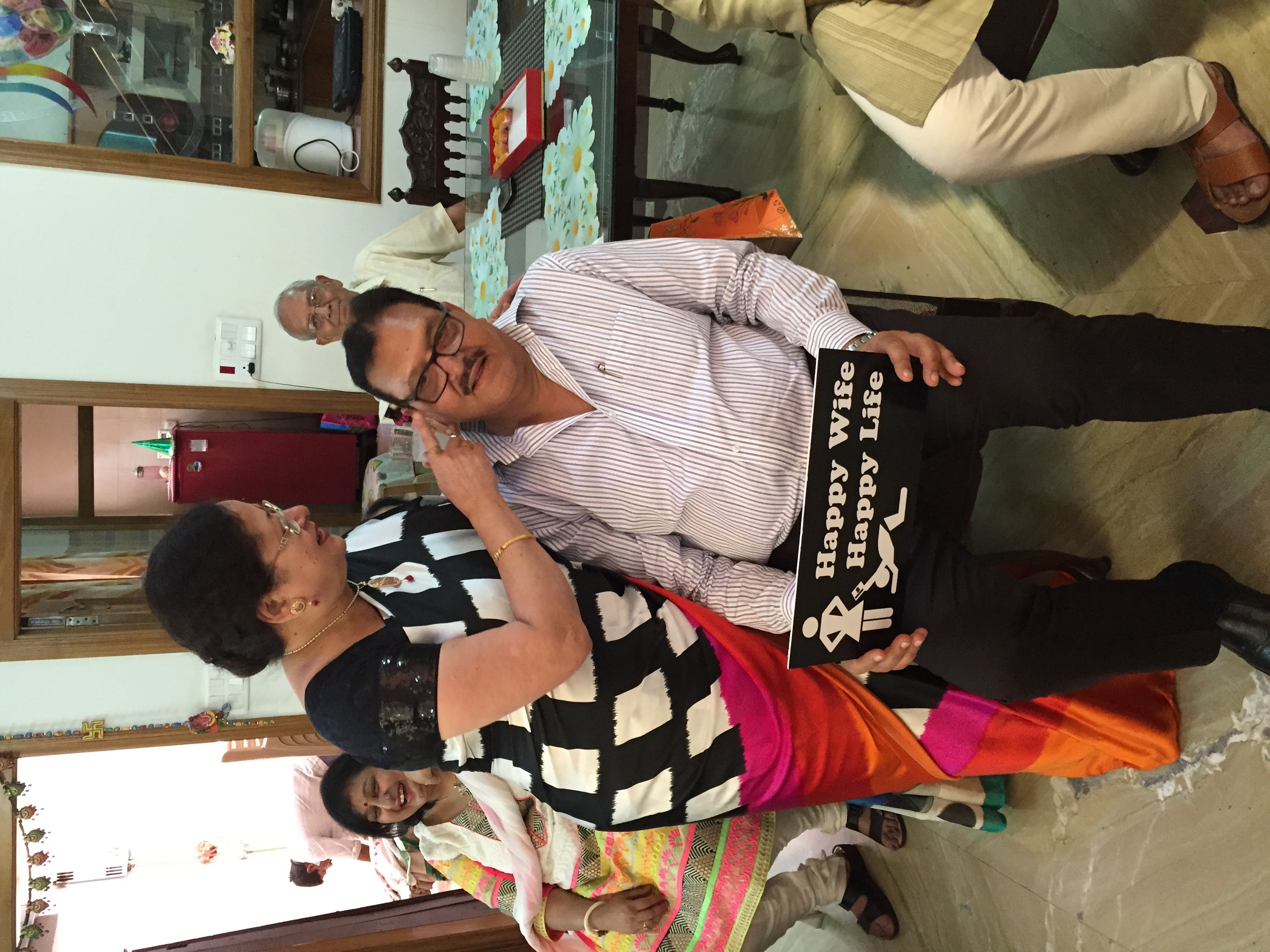
Here is a part of him outsiders never got to see. My father did not, I want to be honest, bring every big decision to my mother — the political ones, the larger civic and financial ones, he mostly took himself, in the way men of his generation did. But there were certain matters — a family question, a decision about the children, a delicate social choice, a small dispute in the neighbourhood, the tone he should take in a difficult conversation — where he would stop and ask what she thought. And on those things, he was not asking as a formality. He genuinely wanted her view.
His method of asking, though, was very much his own. If Mummy agreed with him — wonderful, matter settled, Papa was off to the next thing. If Mummy disagreed, Papa did not just accept it. He would ask her the same question again, an hour later, in slightly different words. Then again the next morning. Then again over lunch. Then over the evening chai. Until she agreed.
I am not going to pretend this was the ideal shape of a conversation between equals; it wasn’t. Mummy would sometimes shake her head at me and smile — “Yeh phir wahi baat le aaya.” But underneath all that persistence, on those particular questions he chose to bring to her, was something my mother understood and I understood watching her: on the things he asked her about, her disagreement was not a decoration he could ignore. Her yes was what he needed. He kept coming back because her assent was what actually settled the matter in his mind.
Most men of his generation did not ask their wives at all — not even on the things they might have. My father asked. Not on everything. But on the things he did bring to her, he asked with a persistence that quietly said your opinion matters to me. And in his particular language, that was a form of respect.
Why I refuse to put her on a pedestal
Now I have to say the other, harder part — because if I do not, I will end up doing to my mother what our culture has been doing to women for centuries: praising them so highly for sacrifice that we accidentally recommend more sacrifice.
I do not subscribe to the worldview that a woman becomes great by giving up everything of her own. That worldview has caused enormous quiet damage across generations. It has taught our mothers, our grandmothers, and too many of my own contemporaries that their needs are optional and their exhaustion is virtue. It has confused love with erasure. It has made “she never complained” a compliment when, sometimes, she should have.
I do not want that for my mother. I do not want that for my daughter. I do not want it for the women who read this. And I do not want it for myself.
So this piece is not asking us to raise a temple to the woman who sacrificed. This piece is asking us to see the labour, name the labour, credit the labour — and then, in the next generation, distribute the labour more fairly.
Appreciation without perpetuation. That is the balance I am reaching for.
The word society still needs: co-founder
So this is not a piece against my father. He knew what she was. The people I am writing to are the rest of us — the newspapers, the municipal minutes, the felicitation certificates, the biographies, the LinkedIn posts, the well-meaning speeches at retirement parties. All those documents still belong to a society that has not yet learned to write the word co-founder next to a woman’s name at home.
We have a language problem, and language is doing our thinking for us. We say “housewife” as if she is married to the house. We say “homemaker” as if she is a hobbyist. We say “supportive spouse” as if she is holding a cup while he drinks. We say “behind every great man” and immediately draw a picture in our head of a woman in the shadows.
All these words are too small.
The correct word — and I mean this in the fullest, working, boardroom sense — is co-founder. Because that is functionally what she was. My father founded a public life. She founded and ran the household enterprise that made the public life logistically, emotionally, and morally possible. Two co-founders in a single venture called a family, doing very different jobs, both indispensable, one with a title and one without.
My father, to his enduring credit, understood this in his private capacity. It is his society — our society — that still owes her the public word.
When I run Su-vastika today, I recognise this pattern everywhere. My husband Kunwer is the Inverter Man of India, and now the Solar Man of India. And I know very personally what I wrote about in The Empire That Fell — And The Marriage That Did Not: that a marriage holds because someone is holding it. My mother taught me how — and my father, watching her all those years, taught me what respect for that holding looks like in a home.
What I carry from her
I carry her way of receiving a guest — water first, then chai, then their news. I carry the discipline of small money, taught by a Mohan’s cornflakes packet. I carry the instinct to remember names, birthdays, worries. I carry the habit of never letting anyone leave the house hungry. I carry the quiet refusal to complain in public.
I also carry, and I want to be honest about this, a certain resistance she did not have — the belief that my exhaustion is not a virtue, and that my needs are not decoration. I am the daughter of her sacrifice and, in this small way, the objector to it. She would be, I think, quietly proud of both.
Mummy was the woman Papa turned to before every decision Kashipur cheered him for.
Both of them raised me.
Somewhere in India this evening, a woman is boiling water for tea because a man she loves has just walked through the door with three visitors he did not warn her about. She will smile. She will pour. He may thank her later, privately, sincerely, the way my father thanked mine. But the visitors will thank only him. The newspaper the next day, if there is one, will name only him. That is the gap this piece is trying to close.
Let this be one small act of thanking her by name. Mummy. My mother. Beena Mehrotra. And every woman like her — the mothers, the grandmothers, the wives of the men we call remarkable — whose uncredited work has been quietly holding up the world, and whose husbands, in the private good ones, always did know.
You are not behind the great man. You are beside him. And in the very best marriages, he was the first to say so — even if the rest of the world was too slow to write it down.