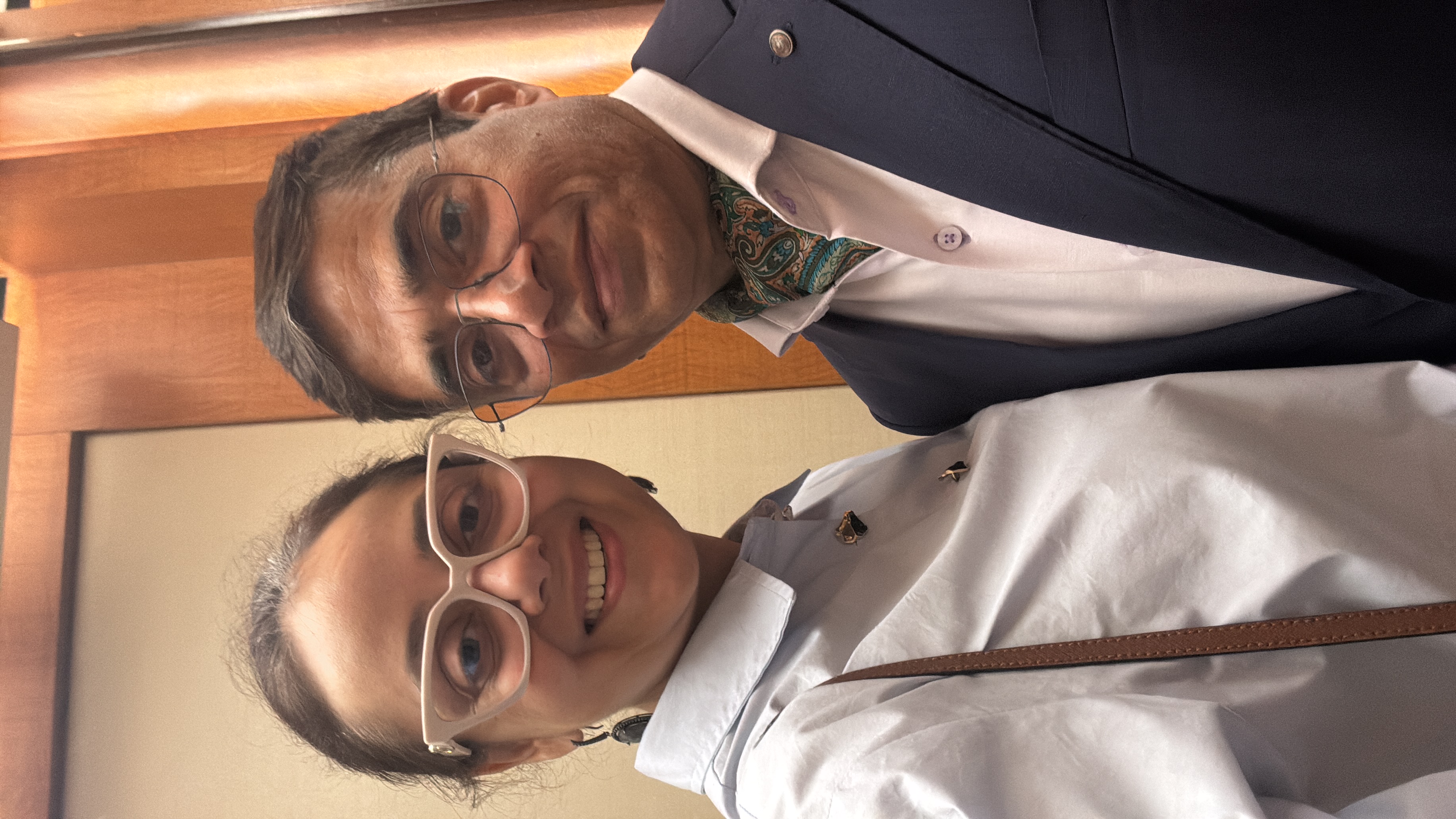
There is a kind of loss that does not have a word for it in our language. We have words for the widow. For the orphan. For the parent who buries a child. But there is no word for the man who builds something with his own hands over twenty-six years — feeds it, nurses it through fevers, watches it learn to stand, then walk, then run — and one day is told, this is no longer yours.
Su-Kam was that for Kunwer. Not a company. A child. Long before I came into his life, he had already begun raising it. He gave it his sweat when there was no money. He gave it his blood when the market did not believe. He gave it his love when everyone around him said inverters are not a business, they are a commodity. And slowly, over decades, he made that child into something the country recognised. The Inverter Man of India was really just a father whose son had turned out well.
Then the child was taken.
When people speak about the Su-Kam bankruptcy, they speak about the IBC, the creditors, the courtrooms, the numbers. Nobody speaks about the grief. And grief is the only word that fits. I watched my husband walk through all five stages of it — not neatly, not in order, sometimes all five in a single afternoon. This is what each one looked like from where I stood.
1 ·Denial“I can still bring him home.”
The IBC was new. The law itself was still learning how to walk. Everyone — the lawyers, the judges, the bankers, the policy makers — was interpreting it as they went. And when a law is new, hope has a place to hide.
Kunwer hid there for a long time.
He met battery after battery of lawyers. Top firms. Second opinions. Third opinions. He read the code late into the night and pointed out clauses that could be read another way. He partnered with Kotak Bank and put together a term sheet for ₹250 crore to bring Su-Kam back.
The proposal was not accepted.
I will never forget the silence in our house the day that news came. It was the silence of a hospital corridor after a code blue. A door had closed, and behind it was everything we had been praying for.
2 ·Anger“How can they not see what he built?”
When denial breaks, anger walks in without knocking.
He was angry at the system. At the people who could not see that the assets far exceeded the debts. At the resolution professionals who paraded the company’s every small fault under a microscope while ignoring twenty-six years of what it had done right. At the ones who now sat in his office and made decisions about a child they had not raised.
But the anger he directed at the world was gentle compared to what he turned on himself.
He replayed decades in his head like a man scrubbing a stain that would not come out. And I — I could only sit near him and remind him, softly, that grief and guilt are not the same thing. That loving a child imperfectly is still loving. That no father who has ever raised anything has done it without regret. Some days he could hear me. Some days he could not.
3 ·Bargaining“What if I try one more court?”
Then came the appeals.
Another court. Another petition. Another chance to lay out, one more time, that the assets were more than the loans, that the debt could easily be serviced, that the child was not sick — the child was being killed.
He wrote. He argued. He met people. He explained the same facts to the same walls. And each time a door closed, he found another door and knocked on that.
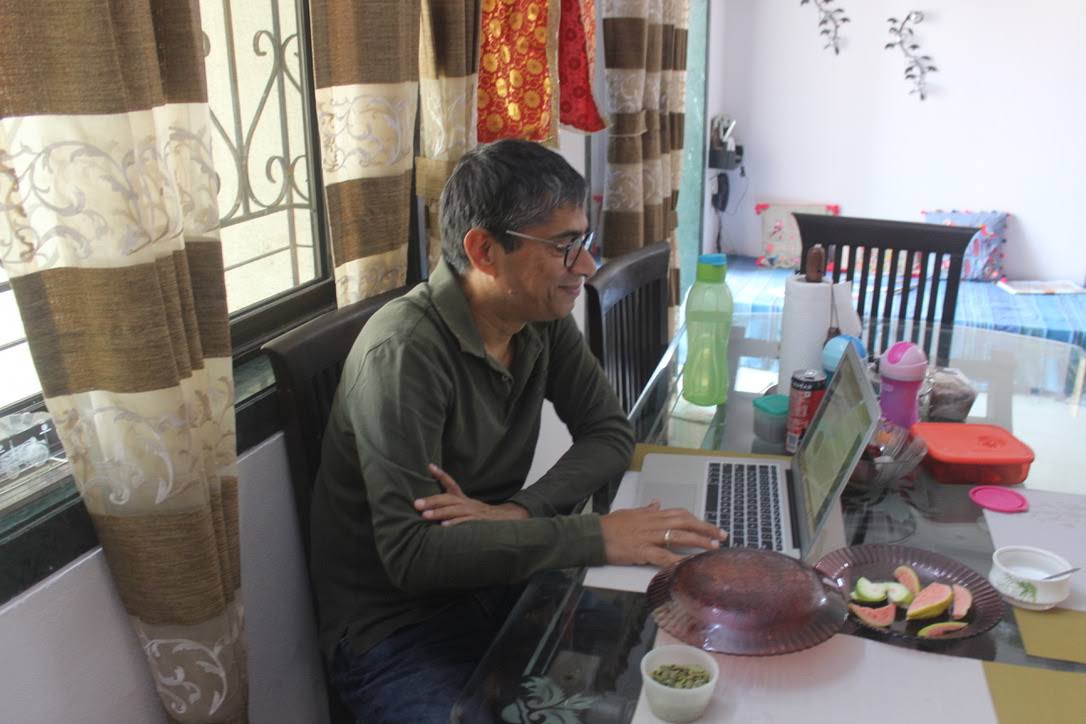
This is the stage nobody warns you about. Bargaining looks like strength from the outside. He was still fighting. He was still functioning. But bargaining is really grief in a suit and tie — the mind refusing to sit down with the truth.
I watched him push the pain under his feet at every meeting, walk in composed, walk out composed, and then sit in the car with his eyes closed for a long time before he could ask me how my day had been. Mind you, none of these stages arrived cleanly. Denial and anger and bargaining lived in our house together, sometimes in the same hour.
4 ·Depression“I don’t want to come out today.”
And then one morning, the fight ran out.
Not dramatically. Just quietly. The man who had always been the towering mountain in our lives — the charmer, the crowd-puller, the one who could walk into any room and change its temperature — did not want to leave the room.
He barely ate. He barely spoke. He filled his hours with punishing physical work or long stretches of learning something new — anything to numb the mind, to keep it too busy to remember what it had lost. He had held the grief down for so long that when it finally rose, it flooded. There was no container for it.
He would appear strong for a meeting outside, come home, and crumble at the door.
Not because he did not love us back. Because our love was a mirror, and the mirror showed him the size of what he had lost. I learned, in those months, that sometimes love means not asking. Not fixing. Not filling the silence. Just being there so that when he was ready to say something, someone he trusted was already in the room.
5 ·Acceptance“I loved you with all my heart.”
Human beings are unbearably adaptable.
That is the miracle and the cruelty of us. What breaks you on Monday is something you can carry on Tuesday. Not because it hurts less. Because you have grown the shoulders to hold it.
One day, Kunwer said — not to me, not to anyone in particular, more to the air —
That was the sentence that turned the season.
He began to look at Su-Kam the way a father looks at a grown child who has moved to another country. With love. With missing. But also with pride. He could stand back and count what he had done — the industry he had built, the thousands of families he had employed, the technology he had put on the Indian map, the entrepreneurs he had inspired. The foundation was his. The rest was life.
The pain is still there. It always will be. But it is bearable now, and less raw, and where the wound used to be, a scab has formed. A scab is not a scar yet. But it is the body’s first promise that healing is possible.
From that scab came Su-vastika
Clean energy. Lithium. A quieter beginning. Su-vastika was not a replacement for the child that was lost — no second child is ever a replacement — but proof that the man who could raise one could raise another. Proof that grief, walked all the way through, has an other side. Today Kunwer is not only the Solar Man of India; he is quietly building the next chapter with Kunwwer.ai, and I lead Su-vastika beside him.
If you want to understand the whole arc — the rise, the fall, and the rebuilding — his own story is told at solarmanofindia.com/story. This piece is not about that arc. This piece is about the room he grieved in, and what it took to sit in that room beside him.
To the woman reading this
To the woman reading this whose husband is somewhere in these five stages — do not rush him through any of them. Denial is not weakness. Anger is not disrespect. Bargaining is not delusion. Depression is not the end. And acceptance is not forgetting.
Sit with him in whichever room he is in today. Bring him water. Turn on a soft light. Do not talk unless he wants to.
The marriage did not.
That is the sentence I want you to hold on to. Because one day, when the scab has formed on both of you, you will look back at this season and know that what you did — quietly, without applause, without a title — was the most sacred work of your life.
Papa taught me that leadership is not a career, it is a calling. I think the same is true of marriage. We are called to hold. Especially when the child that is being lost is not our own — but is everything the person we love has ever been.