Long before I ran a business, I was taught never to read a sentence on its own. I just didn’t know yet that the lesson was really about people, not pages.
What Victorian piano legs taught me first
In my MA in English Literature, one of the first things we were taught was that a text cannot be read in isolation — it has to be read in its time. I remember a professor telling us that in Victorian England, even the legs of a piano were sometimes covered, because a bare wooden leg was considered indecent. It sounds almost comic now. But once you know that, an entire era of literature opens up differently. The repression, the longing beneath the manners, the sentences that circle a feeling without ever naming it — none of it reads as prudishness anymore. It reads as a culture holding its breath. The text hadn’t changed. My understanding of the room it was written in had.
That single idea — that meaning lives in context, not just in words — turned out to be the most useful thing I carried out of a literature classroom and into a boardroom.
Three texts, one discipline
Once you are trained to ask “what was this era carrying?”, you start asking it everywhere.
The covered piano leg
Victorian repression, read against the world that produced it, turns prudishness into a culture quietly holding its breath.
The law of entail
Austen’s marriage plots look like romance — until you know a woman without a husband could lose the house she grew up in.
The trench and the charge
Tennyson wrote war as glory; Owen and Sassoon, who survived the trenches, wrote the same subject as devastation.
Austen gives us an even sharper lesson within a single novel. In Sense and Sensibility, Elinor and Marianne lose the same father, the same fortune, and are disappointed by the same kind of love within months of each other — the identical situation, lived twice, under one roof.
Elinor
Absorbs the loss with a composure that looks almost unfeeling — restraint learned long before that winter began.
Marianne
Collapses into a grief so total it nearly kills her — feeling given no boundary at all.
Same household, same wound, two entirely different people standing beneath it. Austen never tells us which sister is right. She simply makes it impossible to judge either one without first understanding what each girl had already learned about love, loss, and self-control long before that particular winter began. Identical circumstances can produce opposite behaviour — and the difference is never in the circumstance.
I think about this constantly now, watching people rather than reading pages.
Reading my people the way I was taught to read a text
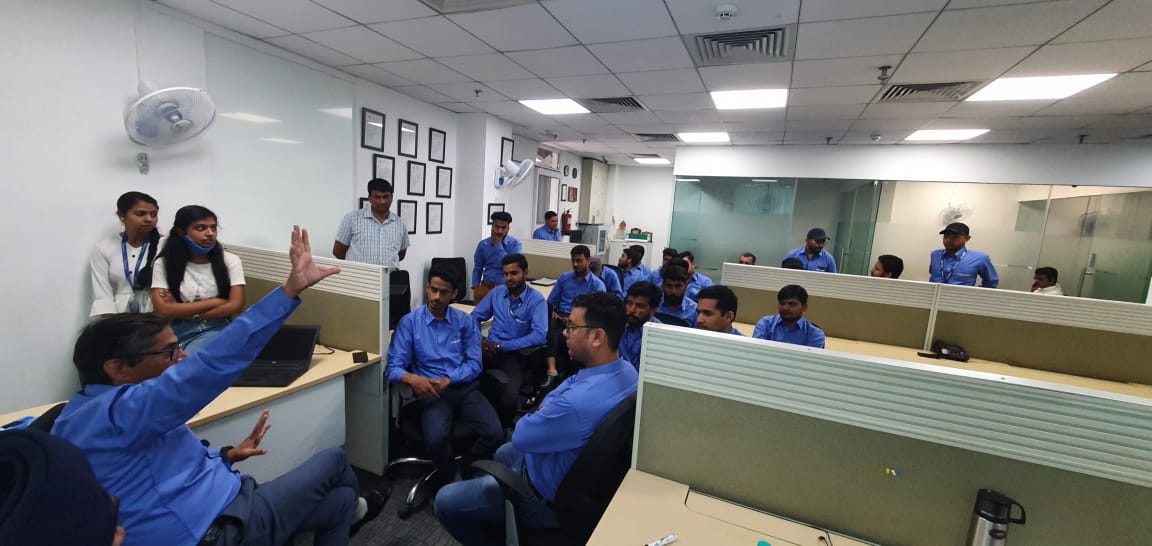
At Su-vastika, I have learned that a hesitant answer, an overly cautious process, a silence in a meeting where I expected an opinion — none of it means what it appears to mean at face value. An engineer who over-explains a small decision may be carrying a previous workplace where being heard meant justifying everything twice. A technician who won’t deviate from a written process, even when a better shortcut is obvious, may be carrying a factory floor where deviation once got someone blamed, or worse. None of this shows up on a resume. It is the covered piano leg of that person’s professional life — an old, unspoken rule they are still quietly obeying, long after the room that required it has changed.
Leadership, I’ve come to believe, asks the same discipline of us that literature once did: someone’s caution is rarely a character flaw. It is usually a footnote you haven’t read yet — a family history, a first job, a generation’s worth of context sitting quietly underneath a single hesitant word.
The question I ask before I ask about marks
This is where my husband and mentor at Su-vastika, Kunwer Sachdev, sharpened what literature had already started in me. When we interview, he has always pushed me to ask about a candidate’s family and how they speak about their last workplace before we ask what they know. Not because knowledge doesn’t matter — but because knowledge is the easiest thing in the world to teach a person who intends to stay. Research on hiring bears this out: Harvard Business Review has found that credentials and past competencies predict far less about future performance than motivation, curiosity, and the will to adapt. What is far harder to teach, and far more decisive, is what already brought that person into the room: whether three people are depending on his salary this month, whether he speaks of his last manager with fairness or with bitterness, whether this job is the ground he is trying to build a life on or simply a stop on the way to somewhere else.
Kunwer would rather hire a man who has never touched the machine but needs this job to hold his family together, than a topper who treats the role as interim — a line on the way to a better offer, a job he does not fully lean on because something, somewhere, is cushioning him from having to. The topper’s knowledge is real. So is his distance. On-the-job skill can be built into almost anyone willing to hold on and earn. Willingness is not built in a classroom; it is built long before he ever walks into ours, in a household we will never see unless we ask.
Not at the piano leg — at the room it stands in
A resume shows what a person knows. It says nothing about why they need to stay, or how they speak of the manager before you — which tells you almost everything about how they will one day speak of you.
I resisted this at first, because it runs against everything a resume is designed to prove. Literature had already taught me to distrust the surface of the page in front of me. Kunwer taught me precisely where else to look: not at the piano leg itself, but at the room it stands in, and the household it has to hold up.
I did not expect, sitting in a literature seminar years ago, that I was being trained for exactly this. But that is, I suspect, what a real education does — it does not just teach you a subject. It teaches you a way of looking, and then hands it back to you, years later, in a room that has nothing to do with books at all.